 KingWong.com
 北京地图Map of Beijing
 长城地图Map of Great Wall
 长江地图Map of Changjiang River
 安徽地图Map of Anhui
 甘肃地图Map of Gansu
 河北地图Map of Hebei
 湖北地图Map of Hubei
 湖南地图Map of Hunan
 江苏地图Map of Jiangsu
 内蒙古地图Map of Neimenggu
 宁夏地图Map of Ningxia
 陕西地图Map of Shaanxi
 上海地图Map of Shanghai
 山西地图Map of Shanxi
 新疆地图Map of Xinjiang
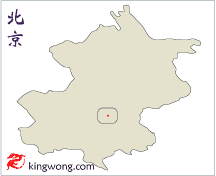
Region: 北京Beijing
天安门广场图片Tiananmen Square Pictures
-
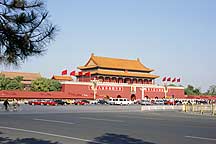
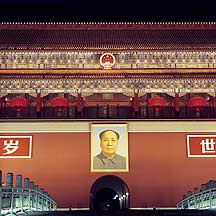
Tiananmen was built in 1417 during the Ming dynasty(1368-1644). It was originally named 承天门Chengtianmen, but the Qing emperor renamed it to its present name in 1651.
-
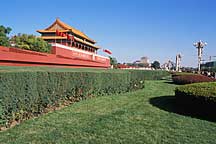
Tiananmen was built in 1417 during the Ming dynasty(1368-1644). It was originally named 承天门Chengtianmen, but the Qing emperor renamed it to its present name in 1651.
-
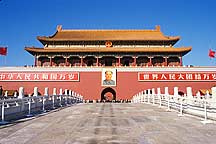
Tiananmen was built in 1417 during the Ming dynasty(1368-1644). It was originally named 承天门Chengtianmen, but the Qing emperor renamed it to its present name in 1651. The center lane was reserved for the emperor, and is closed to the public today.
-
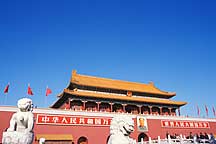
Tiananmen was built in 1417 during the Ming dynasty(1368-1644). The gate was originally named 承天门Chengtianmen, but the Qing emperor renamed it to its present name in 1651. There had been numerous renovations on the gate since the establishment of the People's Republic in 1949.
-
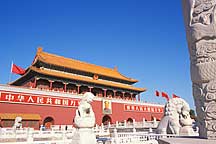
Tiananmen was built in 1417 during the Ming dynasty(1368-1644). The gate was originally named 承天门Chengtianmen, but the Qing emperor renamed it to its present name in 1651. There had been numerous renovations on the gate since the establishment of the People's Republic in 1949.
-
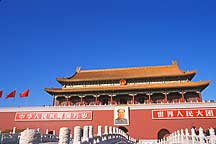
Tiananmen was built in 1417 during the Ming dynasty(1368-1644). The gate was originally named 承天门Chengtianmen, but the Qing emperor renamed it to its present name in 1651. There had been numerous renovations on the gate since the establishment of the People's Republic in 1949.
-
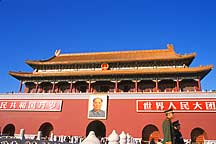
Tiananmen was built in 1417 during the Ming dynasty(1368-1644). The gate was originally named 承天门Chengtianmen, but the Qing emperor renamed it to its present name in 1651. There had been numerous renovations on the gate since the establishment of the People's Republic in 1949.
-
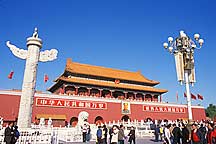
Tiananmen was built in 1417 during the Ming dynasty(1368-1644). The gate was originally named 承天门Chengtianmen, but the Qing emperor renamed it to its present name in 1651. There had been numerous renovations on the gate since the establishment of the People's Republic in 1949.
-
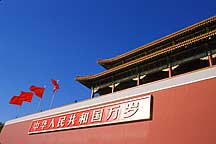
One of the set of large characters gracing the facade of this gate. It reads "Long Live The People's Republlic of China"
-
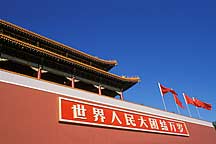
One of the set of large characters on the gate's facade. It reads "Long Live World Unity"
-
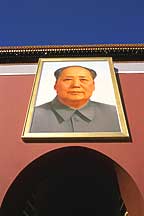
The very large portrait of the revolutionary leader.
-
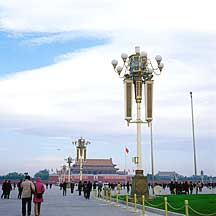
Tiananmen Square in December
-
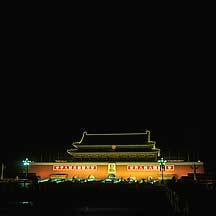
Tiananmen lit at night.
-
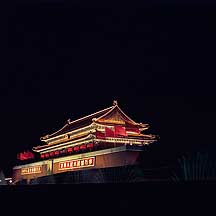
-
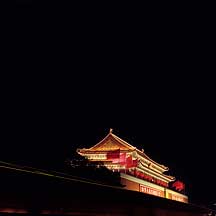
-
-
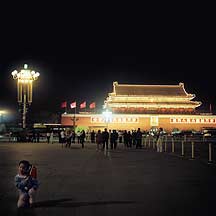
girl posing with the chinese flag on the square
-
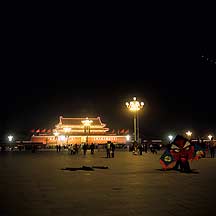
kite flying is a popular pasttime in this big square.
-
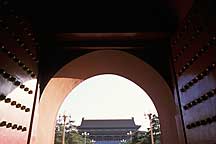
through the 天安门Tiananmen gate
-
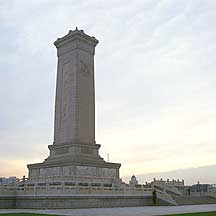
This large granite obelisk was completed in 1958. Its surfaces have bas-relief carvings and writings of important revolutionary events within the last hundred years in china. The large calligraphy are that of Mao Zedong. Also included are the calligraphy of Premier Zhou Enlai. The guarded monument sits on the center of the square.
-
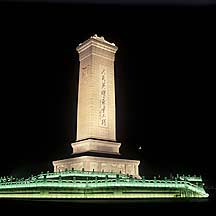
This large granite obelisk was completed in 1958. Its surfaces have bas-relief carvings and writings of important revolutionary events within the last hundred years in china. The large calligraphy are that of Mao Zedong. Also included are the calligraphy of Premier Zhou Enlai. The guarded monument sits on the center of the square.
-
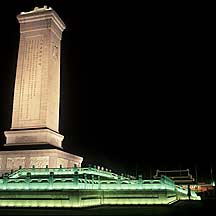
This large granite obelisk was completed in 1958. Its surfaces have bas-relief carvings and writings of important revolutionary events within the last hundred years in china. The large calligraphy are that of Mao Zedong. Also included are the calligraphy of Premier Zhou Enlai. The guarded monument sits on the center of the square.
-
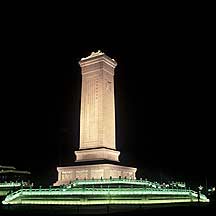
This large granite obelisk was completed in 1958. Its surfaces have bas-relief carvings and writings of important revolutionary events within the last hundred years in china. The large calligraphy are that of Mao Zedong. Also included are the calligraphy of Premier Zhou Enlai. The guarded monument sits on the center of the square.
-
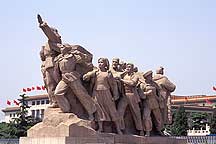
Stature of revolutionaries.
-
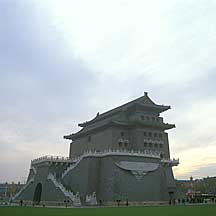
前门Qian Men consisted of two towers:Jian lou and Zhengyang Men. Jian Lou is the southern tower.
-
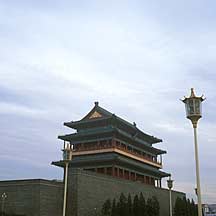
前门Qian Men consisted of two towers:Jian lou and Zhengyang Men. Zhengyang Men is the northern tower. Completed in 1440 during the Ming Dynasty. It is the tallest of the nine major gates constructed about the same time.
-
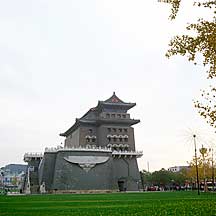
前门Qian Men consisted of two towers:Jian lou and Zhengyang Men. Jian Lou is the southern tower.
-
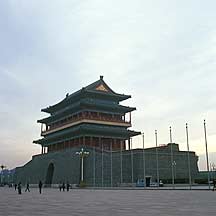
前门Qian Men consisted of two towers:Jian lou and Zhengyang Men. Zhengyang Men is the northern tower.